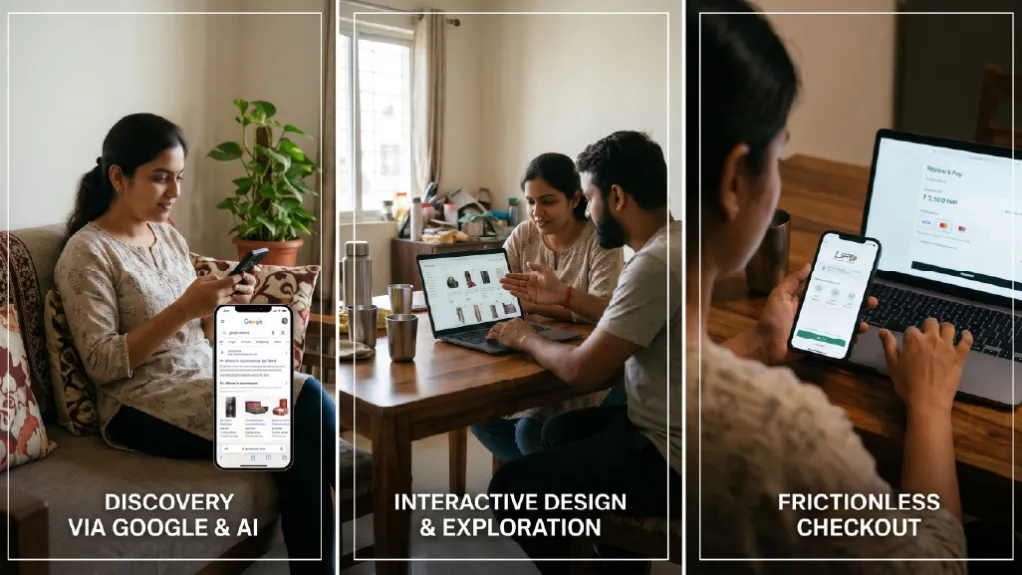
 >E-commerce> From Google and AI Product Discovery to Checkout: How E-commerce Design Shapes the Buying Journey
From Google and AI Product Discovery to Checkout: How E-commerce Design Shapes the Buying Journey
Online shopping's shifting under our feet. People are not just typing keywords into Google and scrolling through results anymore - AI-powered shopping is pushing discovery toward something more conversational, more visual, built around comparing options before actually deciding. Google's a good example here: AI shopping experiences have expanded across Search and Gemini, pulling together prices, reviews, and availability in one place.
That shift means E-commerce design has to be more than just a good-looking storefront. The design now needs to carry the entire buying journey - discovery, evaluation, trust, the actual decision, cart management, checkout, all of it.
Product Discovery Starts Before the Website Visit
A customer might find a product through Google Search, Shopping results, AI Mode, Gemini, social media, or any number of other channels. Google's AI shopping tools let people explore products through conversational queries, visual results, side-by-side comparisons, detailed specs.
For ecommerce businesses, that means product information has to hold up outside the website itself too. Accurate names, descriptions, images, pricing, availability - all of it builds the foundation discovery actually depends on. Google also supports product and merchant listing structured data, specifically to help Search understand what a product actually is.
Design is not just what it looks like and feels like. Design is how it works.:- Steve Jobs
Design Shapes the Decision
Once someone actually lands on an ecommerce site, the experience needs to answer their questions fast. Clear photography, useful descriptions, visible pricing, specs, reviews, delivery info, easy navigation - all of it makes evaluating a product simpler, not harder.
Good E-commerce design cuts unnecessary friction out entirely. Instead of making someone dig through five pages to understand a product, the interface should just lay out what matters, in order that actually makes sense. Filters, categories, search, product comparisons, clear calls to action - these push shoppers toward a purchase with real confidence, not hesitation.
In a Nutshell
Discovery may bring the shopper to your product, but design helps them decide whether to buy it.
From Google and AI-powered product discovery to the final checkout step, every interaction can influence the buying journey. A thoughtful ecommerce experience connects information, usability, trust, and conversion - helping businesses turn digital product visibility into meaningful customer action.
From Product Page to Cart
The journey doesn't stop once someone picks a product. The cart's doing real work too, keeping that momentum going.
A cart that's actually well-designed shows selected products, quantities, pricing, applicable offers, delivery details, and the next step - clearly, without making someone hunt for it. Distractions, complicated processes, extra steps - any of it can break the momentum right there. The whole point is making the move from considering a product to actually buying it feel obvious, not like work.
Checkout Is Part of the Experience
Checkout might be the single most important stage in ecommerce, because it's where buying intent turns into an actual transaction. Customers need total clarity on what they're buying, what they'll pay, how the order gets completed.
Google's building new commerce experiences too, ones that tie discovery and checkout closer together. Its Universal Cart and Universal Commerce Protocol are built to support shopping journeys across Google's own surfaces, with checkout that can happen either through Google directly or continue over on the retailer's own website.
What Businesses Should Focus On
The future of ecommerce isn't really about piling on more features. It's about building a connected journey - discovery, information, design, trust, checkout, all actually working together instead of as separate pieces.
Worth focusing on:
- Clear and accurate product information
- Fast and intuitive navigation
- Mobile-friendly experiences
- Strong product visuals and genuinely useful content
- Simple cart and checkout flows
- Transparent pricing, delivery, and return information
- Product data that search and shopping platforms can actually understand


