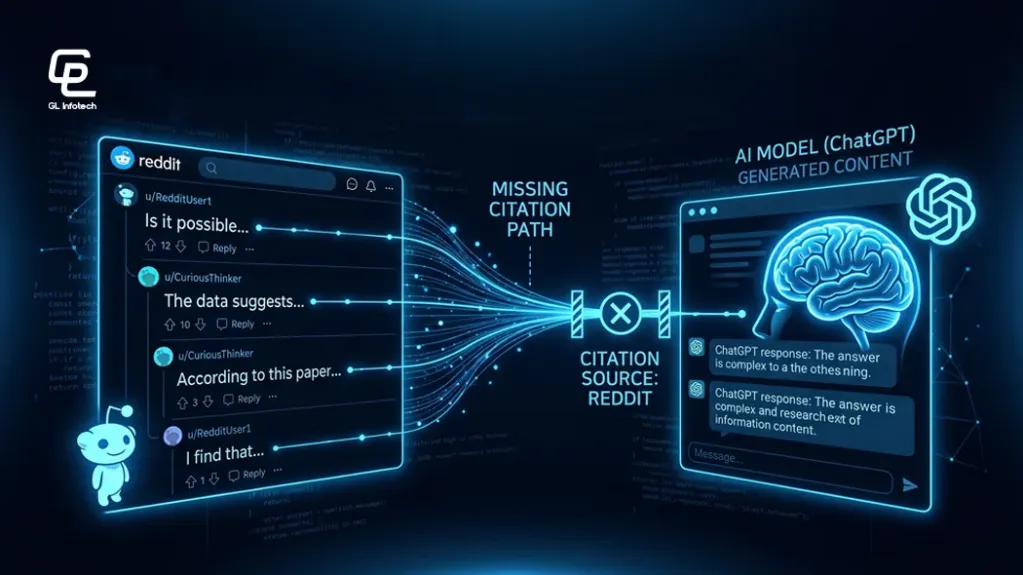
The AI Citation Gap: Why ChatGPT Rarely Credits Reddit Sources
Why Your Content Isn't Showing Up in AI Search (And What to Do About It)
Have you noticed how some online communities become go-to knowledge sources while others just... fade out? It's not random. As search behavior shifts faster than most of us can keep up with, the rules for getting found online are quietly being rewritten.
Traditional SEO isn't dead, but honestly, it's not enough on its own anymore. AI-powered search has changed what "good content" actually means — and if your strategy still revolves around keyword counts and backlinks, you're probably already feeling the gap.
AI Search Doesn't Think Like Google Used To
Old-school SEO was pretty mechanical — stuff the right keywords in, earn some backlinks, climb the rankings. AI search is different. It's trying to understand why someone is searching, not just what they typed.
That means a few things matter more now:
- How clearly you explain your topic — vague or surface-level content gets passed over
- Whether your page structure makes sense — schema markup actually helps AI understand what your content is for
- Whether you're writing for people — keyword stuffing actively works against you now
Great Content Alone Won't Cut It
Here's something that surprised me when I first looked into this: quality content by itself isn't a ranking guarantee anymore. What AI search engines are really evaluating is semantic relevance — basically, how well your content fits the full picture of what a user is trying to figure out.
The sites that do well tend to cover topics thoroughly — not just the main keyword, but the related questions, the adjacent subtopics, the conversational phrases people actually use when they search. Think less "target keyword" and more "does this page genuinely help someone?"
Intent Matters More Than Keywords
If someone searches "how do I cite a Reddit post" or "best tools for digital marketing," they're not looking for a page that repeats those phrases 15 times. They want a real answer, in plain language, that actually moves them forward.
Your content strategy should be built around answering genuine questions. A few things that help AI understand your content better:
- FAQs that address what people actually ask
- Contextual headings that guide the reader
- Structured data so search engines can parse your page properly
- Subtopics that fill in the gaps around your main subject
Building an SEO Strategy That Actually Works Now
The shift isn't that complicated once you accept it: stop optimizing for search engines and start genuinely helping your readers.
That means answering real questions instead of padding for keyword density, organizing your content so it's easy to skim and navigate, and going deep on topics rather than skimming the surface. Brands that do this naturally earn the credibility that AI search rewards.
Where This Is All Heading
If you're still chasing rankings the old way, it's going to get harder. The sites that will win going forward are the ones people actually trust — the ones with clear, thorough, context-rich content that treats readers like intelligent adults.
Keywords still matter, but they're a small piece of a much bigger picture now. The real question isn't "did I use the right phrase enough times?" — it's "did I actually help someone?" Get that right, and the visibility tends to follow.
FAQ's
What does "citation" mean?
A citation in digital platforms refers to the explicit credit, link, or mention given to an original source when its content is utilized within AI generated answers.
What is the difference between retrieval and citation in AI search?
Retrieval involves the AI pulling data into its backend knowledge base for knowledge extraction, whereas citation is the visible act of explicitly linking out to that source for the user.
Does ChatGPT use Reddit data in its answers?
Yes, AI models leverage massive amounts of forum data for knowledge extraction, but they often summarize the information in a zero-click search format without providing a direct reddit citation.
How does content structure affect AI citation chances?
Good website performance, structured headings, and organized formatting help AI search platforms understand, rank, and display your content more effectively in search results.
What type of content is most likely to be cited by AI?
Platforms like Google AI Overviews and Bing AI prioritize content that answers user questions clearly, provides genuine value, and features easy-to-understand, authoritative data.