The Future of E-commerce: AR/VR Shopping Experiences Explained
What if you could try a product before buying it without ever stepping into a store? What if online shopping felt as real and interactive as walking through a showroom? And what if you could explore an entire store from your home, experiencing products in a way that feels almost physical?
These questions are no longer hypothetical. With the rise of augmented reality in e-commerce and virtual reality shopping, the digital retail space is becoming more immersive and experience driven. But to understand this shift clearly, it is important to know the difference between the two:
- Augmented reality = real world + digital elements
- Virtual reality = completely digital world
In simple terms, augmented reality enhances what you already see around you, while virtual reality replaces it with an entirely new environment. Together, they are transforming how people interact with products online.
Bridging the Gap with Augmented Reality
One of the biggest advancements shaping online shopping is augmented reality in e-commerce. This technology allows customers to place products into their real world environment before making a purchase. Whether it is visualizing décor, accessories, or lifestyle products, the concept of an augmented reality store creates a seamless blend between digital and physical shopping.
Why augmented reality is transforming e commerce:
- Enables real time product visualization in personal spaces
- Reduces uncertainty and builds buyer confidence
- Makes online shopping more interactive and engaging
- Helps businesses lower product return rates
Entering the World of Virtual Reality Shopping
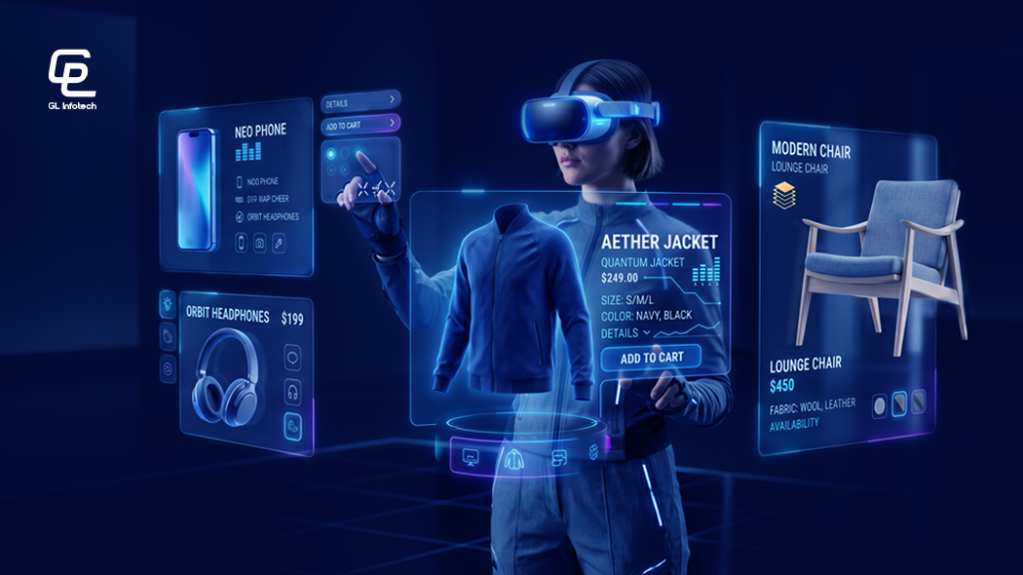
While augmented reality enhances the real world, virtual reality shopping creates a completely new one. Customers can step into a fully immersive digital store, walk through collections, and interact with products just like they would in a physical setting. This not only makes the shopping journey more engaging but also allows brands to create visually rich and memorable environments.
Key benefits of virtual reality shopping:
- Immersive and lifelike shopping environments
- Better product interaction and exploration
- Stronger emotional engagement with brands
- A more enjoyable and experience focused journey
Virtual Reality Fashion: A New Way to Explore Style
Among the most exciting innovations is virtual reality fashion, which is changing how people discover and choose clothing. Instead of imagining how an outfit might look, customers can try it on in a virtual environment. This allows them to see how styles fit, move, and appear from different angles, making the entire process more intuitive.
What makes virtual reality fashion stand out:
- Virtual try ons without physical limitations
- Easy experimentation with different styles and combinations
- Clear understanding of fit and appearance
- Highly personalized shopping experiences
Why Immersive Experiences Matter
The rise of the augmented reality store and advancements in virtual reality shopping highlight a clear shift in consumer expectations. Modern shoppers are looking for experiences that feel engaging and meaningful. By integrating augmented reality in e-commerce, brands can go beyond basic selling and create deeper connections with their audience, making every interaction more memorable.
Challenges and the Road Ahead
Despite the many advantages, adopting these technologies comes with challenges such as development costs, technical complexity, and accessibility. However, as technology continues to evolve, these barriers are gradually decreasing. More businesses are now exploring ways to integrate immersive solutions into their platforms, making them more widely available.
The Future of Shopping
E-commerce is moving towards a future where experience is just as important as convenience. With the growth of virtual reality fashion, the expansion of virtual reality shopping, and the continued evolution of the augmented reality store, digital retail is becoming more immersive than ever. As augmented reality in e-commerce continues to advance, shopping will no longer feel distant. It will feel real, engaging, and deeply connected to the customer’s world.
FAQ
1. What is augmented reality (AR)?
Augmented reality is a technology that adds digital elements to the real world. It allows users to see virtual products in their real environment, such as placing furniture in a room or trying on accessories using a smartphone.
2.What is VR?
Virtual reality is a technology that creates a completely digital environment. Users can enter this virtual space and interact with products or surroundings as if they were physically present, usually with the help of a headset.
3.How does augmented reality (AR) differ from virtual reality (VR)?
Augmented reality enhances the real world by adding digital elements, while virtual reality replaces the real world with a fully digital environment. In simple terms, AR adds to reality, whereas VR creates a new reality.
4.What is the Role of AR and VR in eCommerce?
Augmented reality and virtual reality make online shopping more interactive and engaging. They help customers visualize products, explore virtual stores, and make better purchase decisions, improving overall customer experience and satisfaction.
5.How does AR improve online shopping experiences? Augmented reality improves online shopping by allowing customers to see how products look in real life before buying. This reduces uncertainty, increases confidence, and helps customers make more informed decisions, leading to fewer returns.